
“But You’re Not My Mother”: What Dads Often Miss About Mother’s Day
Updated: May 15
There’s a very particular heartbreak that seems to arrive every year around Mother’s Day.
Not because moms are asking for diamonds or grand gestures or social-media-worthy brunch reservations. Honestly, most mothers I know are asking for something much smaller than that: they want to feel seen.
And what continues to surprise me, after almost eight years of building spaces around parents and motherhood at Le Village Cowork, is how many dads genuinely do not understand the emotional weight of this holiday. Not because they are bad men. Not because they don’t love their partners. But because many of them were never taught that part of adulthood — especially not the invisible labor of thoughtfulness.
I’ve heard some version of the same sentence over and over again through the years: “But you’re not my mother.” And I understand the logic of it. I really do.
But what that misses is that for the first decade — honestly, maybe longer — of a child’s life, the mother is usually the one carrying the emotional architecture of the family. She is Christmas magic. She is Easter baskets. She is the one remembering the matching pajamas, the birthday candles, the teacher gifts, the pumpkin patch tickets, the stocking stuffers, the family photos, the traditions, and the tiny details that transform life from functional into meaningful.
Again, not always. Families look different. Dynamics look different. But in many homes, mothers are the ones holding that thread together.
Mother’s Day is the one day where she is not supposed to be the magician. She is supposed to be the recipient of the care. And when dads opt out because they believe their only responsibility is celebrating their own mother, what often happens is that the mother of their children simply does not get celebrated at all. Not really. Maybe she gets a rushed card. Maybe flowers grabbed at Walgreens. Maybe a distracted “Happy Mother’s Day” while she’s still coordinating breakfast reservations and making sure the diaper bag is packed. And it hurts more deeply than I think many men realize.
Because it’s not actually about the gift. It’s about the realization that the person beside you may not fully understand how much of the emotional world you are carrying.
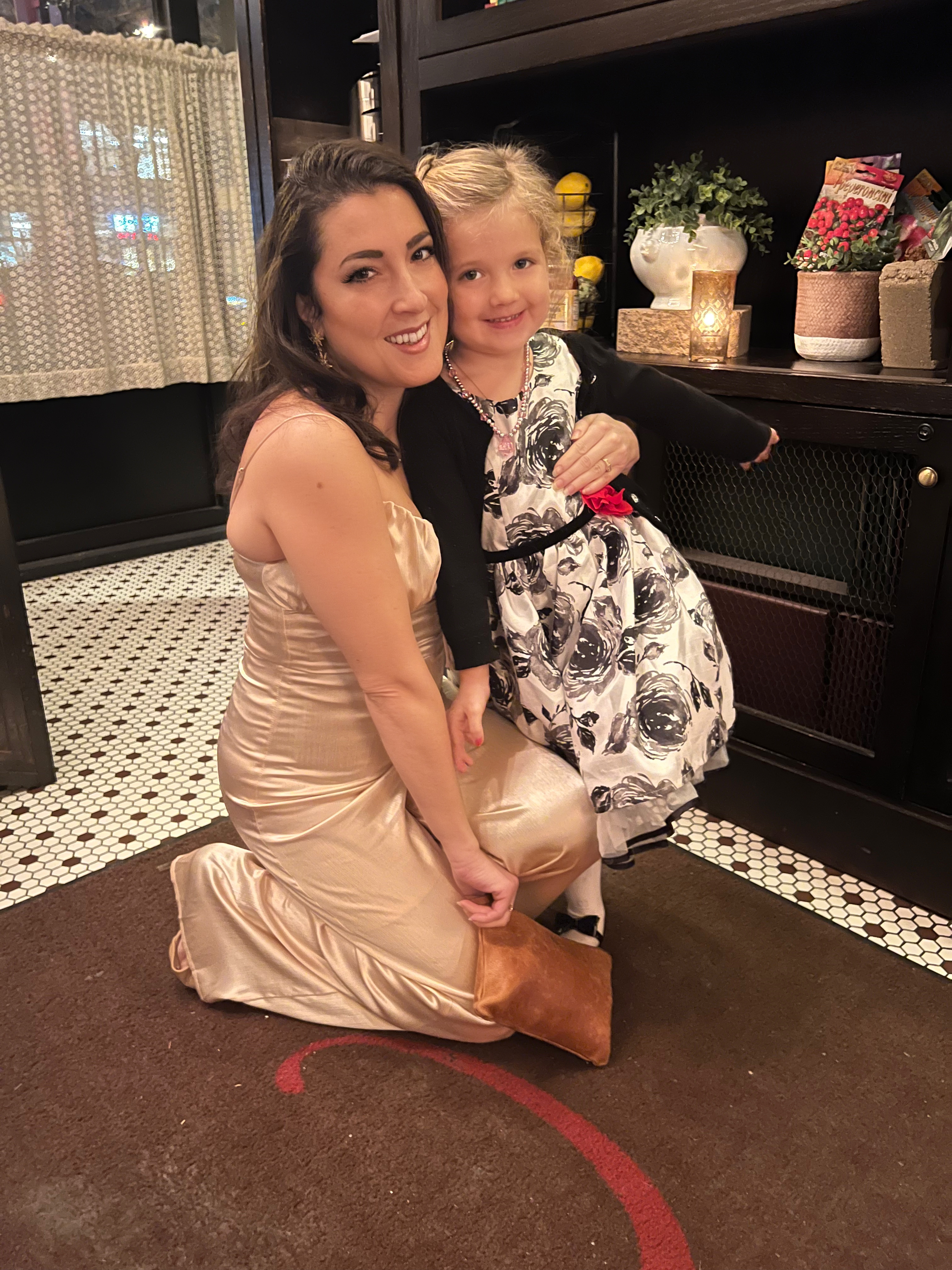
I asked Nate if I could share this story because I actually think it’s an important one. Our first Mother’s Day after Vivie was born was rough. Really rough. We were in that season so many couples know intimately — sleep deprivation, identity shifts, resentment, survival mode, trying to figure out how to still be married while also becoming parents.
Mother’s Day came and went… and I got nothing. I was so hurt. And in his defensiveness — but also, I think, in genuine confusion — Nate eventually said the sentence: “But you’re not my mother.”
I remember just staring at him, because in my mind, our infant daughter obviously could not orchestrate Mother’s Day. She couldn’t drive herself to Target. She couldn’t book a reservation. She couldn’t buy a gift or make pancakes or plan a moment. The point was never that the baby was buying me something. The point was that my partner was helping teach our child how to love people. How to celebrate people. How to create care.
But I genuinely think he had never thought about it that way before. Not maliciously. Not intentionally. He just didn’t know.
Eventually, after a lot of hurt feelings and conversations, he bought me a massage package. But I was so angry that I refused to use it for years. Literally years. At the time, it felt symbolic of how unseen I felt in that season of motherhood.
Ironically, years later, we finally used that massage package together for an anniversary. By then, we had both softened a little. We had both grown up a little. And I could finally see what I couldn’t see back then: sometimes people fail us not because they don’t love us, but because nobody ever taught them how to show love in that particular language.
Many boys are not raised learning how to practice thoughtfulness in visible, intentional ways. They are often raised surrounded by it instead. They grow up watching Mom remember Teacher Appreciation Week, order the class gift, notice the email about Crazy Sock Day, pack the extra snacks, text the birthday reminder, bring a hot dish when someone is hosting, plan little surprises “just because,” and quietly learn the social etiquette that keeps relationships and families feeling cared for. They watch women anticipate needs before they are spoken out loud.
The internet is full of videos where Dad has no idea what the kids are opening on Christmas morning and it’s presented as funny or endearing — like he’s just as surprised as the kids are. HAHA! But underneath that joke is also a very real truth: someone else carried the labor of knowing. Someone else researched the gifts, ordered them, wrapped them, remembered batteries, thought about what each child would love, and created the emotional experience everyone else gets to simply arrive inside of.
And because so much of that labor looks small while it’s happening, many men grow up never fully understanding that it is labor at all. They experience the warmth of thoughtful homes, thoughtful holidays, thoughtful relationships — without always seeing the person constantly thinking ahead to create them.
I think the more painful — and honestly more toxic — layer of this conversation is that many women are made to feel like this thoughtfulness is frivolous in the first place. Like it’s “extra.” Like it’s unnecessary. Like the desire to create tenderness, ritual, surprise, delight, beauty, celebration, or warmth inside a family is somehow self-inflicted labor that women are choosing to burden themselves with.
“You don’t have to do all that.” “You’re making it harder on yourself.” “Nobody asked for that.”
I’ve heard versions of that in my spaces as well.
But I think what gets missed in those conversations is that these small acts of care are not superficial to many families — they are the emotional fabric of family life. They are what make childhood feel safe and memorable and grounding. They are what transform survival into belonging.
And this isn’t some luxury reserved for wealthy families either. We grew up poor. Really poor in stretches. But my mom still made sure there was magic wherever she could create it. There was still a Christmas tree. There were still small presents. Maybe there wasn't a grand gift for my teacher—but there was a heartfelt note. There were still birthdays acknowledged by my favorite dinner and boxed cake. There were still traditions protected and moments where we felt cared for, even when money was tight. Not every single thing was magical all the time, of course. Life was hard. But the effort itself mattered.
Because thoughtfulness is not about extravagance. It’s about intention. It’s about someone saying, “I thought about you before this moment arrived.”
And I think many women instinctively understand that. We understand that these tiny gestures accumulate over time into the feeling of being loved. Of being known. Of being emotionally held inside a family. They become the memories children carry into adulthood — the traditions they recreate for their own families one day, often without even realizing where they learned them. The small moments that stay with you forever. The ones that still bring a quiet smile years later when you remember them. To this day, I’d rather have a yellow boxed cake and canned chocolate frosting on my birthday than anything else.
So when women are told that all of this is unnecessary or dramatic or self-created labor, what they often hear is: The things that matter deeply to you do not matter deeply to me. And that disconnect can become incredibly lonely inside a partnership.
So if you are a dad reading this and thinking, “I always make Mother’s Day special,” thank God for you. Truly. Spread the good word.
But if you’re reading this with that sinking feeling of, “Oh no. I think I missed this,” please know this too: repair goes a long way. Sincere effort goes a long way. Even awkward effort goes a long way.
She may not immediately receive it. She may still be hurt. But she will remember that you tried. Because underneath all the brunch reservations and flowers and handmade cards, what most mothers are actually asking is: “Do you see me?” Do you see the mental load? The invisible planning? The emotional buffering? The way I am constantly creating warmth and memory and stability for this family? Do you see how exhausting it can be to always be the one creating care for everyone else?
Mother’s Day matters because, for once, mothers want to experience the feeling they work so hard to create for everybody around them: a little anticipation, a little thoughtfulness, a little delight, a little tenderness.
That’s it.
Not perfection. Not extravagance. Just evidence…that someone noticed.
-DBC
A very special shoutout to Michael. An OG Le V Dad who wasn’t afraid to sit in the circle…and noticed. Thank you for coordinating with all of our husbands and partners to create this special Mothers Day memory. And thank you to my Nate for letting me share this story. Thank you for loving me and putting in the work. And thank you for creating a magical mothers day for me every year since the day in this article. 💕

mình có lần lướt đọc mấy trao đổi trên mạng شيخ روحاني thì thấy nhắc nên cũng tò mò mở ra xem thử cho biết. mình không tìm hiểu sâu chỉ xem qua trong thời gian ngắn để quan sát bố cục cách sắp xếp جلب الحبيب các mục và trình bày nội جلب الحبيب dung tổng thể. cảm giác là các phần được trình bày khá gọn, các hurentest berlin mục rõ ràng Huren Berlin nên đọc lướt cũng không bị rối với mình như vậy là đủ để nắm tin cơ bản rồi. جلب الحبيب
👍
I tend to be careful when checking out a new game site, so I researched True Fortune Game Online before drawing conclusions https://truefortunegaming.com/login/. I looked at the game selection and read about the general conditions. The catalogue includes options from Rival, Betsoft, and Saucify, along with table and specialty games. There are introductory offers for eligible newcomers, but I believe it is important to understand the requirements behind them. From my point of view, a good experience starts with realistic expectations. I would rather spend time comparing information and reading the rules than be influenced by big claims. That's the approach that worked best for me here.
SITUS TOTO
Keep up the good work; I really like this article.
BEJOTOTO
BEJO TOTO
TOTO
I really like the articles you provide; they have greatly broadened my horizons.
IDRTOTO
IDR TOTO
I really like the articles you provide; they have greatly broadened my horizons.