
Women Built Their Careers. The System Didn’t Catch Up.

A Women’s History Month Reflection on Work, Motherhood, and the Infrastructure We Still Haven’t Built
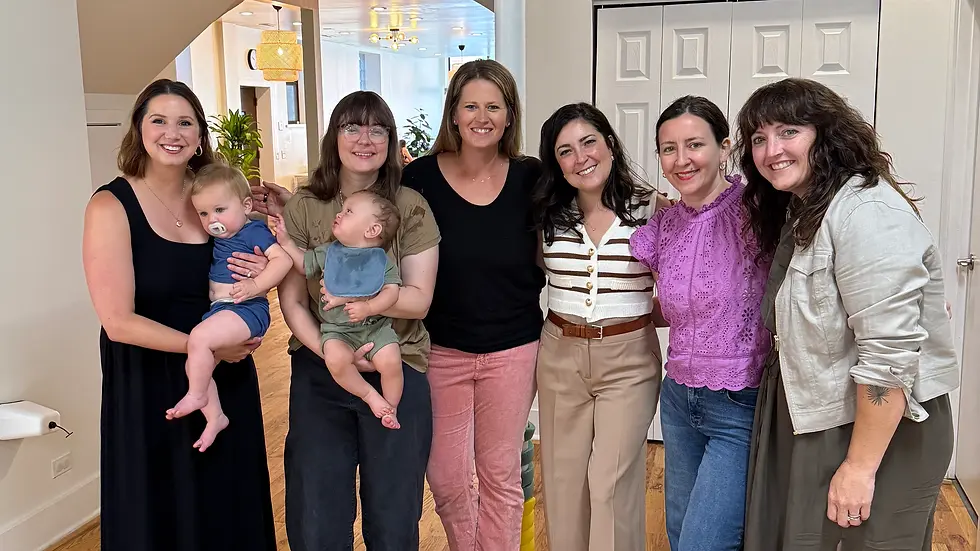
Every March, during Women’s History Month, we celebrate the extraordinary progress women have made.
Women now earn the majority of college degrees. Women are launching businesses at record rates. Women are leading companies, governments, and industries that were once closed to them.
In many ways, the last fifty years have rewritten the expectations for what women can accomplish professionally.
But there’s a quiet truth that sits beneath all of this progress.
Women’s economic advancement has dramatically outpaced the systems designed to support their lives. And nowhere is that gap more visible than in the years when women become mothers.
The System Was Built for a Different Era
The modern workforce was largely designed around a very different family structure — one where a full-time caregiver stayed home while another adult worked outside the home.
Today, that model simply doesn’t reflect how most families live.
In the United States, the majority of households with children rely on two incomes. Women make up nearly half of the workforce, and mothers are among the most educated segments of the labor market.
Yet the systems around family life — childcare, work environments, and community structures — have barely evolved.
Parents are navigating careers in a world where childcare is scarce and expensive. Extended family often lives far away. Communities that once shared the work of raising children have largely disappeared. So families are trying to operate inside systems that were never designed for them.
And when those systems break down, it is usually women who carry the cost.
The Hidden Labor of Holding Everything Together
For many mothers, the challenge isn’t simply returning to work after having children.
It’s managing the invisible logistics that surround it.
Finding reliable childcare. Coordinating schedules. Managing illnesses and school closures. Balancing professional responsibilities while trying to stay connected to their children’s daily lives.
These responsibilities are often described as the “mental load,” but in reality they represent an enormous amount of unpaid labor that keeps families functioning.
The result is that many talented women quietly step back from careers they once worked hard to build — not because they lack ambition, but because the surrounding systems make participation extraordinarily difficult.
Businesses lose experienced employees. Families lose income and stability. And the broader economy loses talent. Increasingly, economists are recognizing that childcare isn’t simply a family issue.
It’s workforce infrastructure.
The Missing Infrastructure
In most industries, when demand grows, infrastructure evolves to support it.
When millions of people began working remotely, coworking spaces emerged to provide flexible work environments. When wellness became a cultural priority, fitness studios and health platforms expanded to meet the demand.
But when millions of parents entered the workforce, the systems supporting family life remained largely unchanged.
Traditional childcare centers were built for full-day separation between parents and children. That model works for many families, but it doesn’t work for all.
Some parents want to remain closer to their children during the early years. Others work flexible or hybrid schedules that don’t align with full-time daycare. Many families are simply looking for a middle ground that allows both career continuity and meaningful presence in their children’s lives.
For decades, that middle ground barely existed.

The Rise of the Parent Economy
What we’re starting to see now — across industries and communities — is the early formation of what could be called the Parent Economy.
The Parent Economy includes businesses and services designed specifically around the realities of modern family life.
Flexible work environments. Community-centered support systems. Services that allow parents to remain professionally engaged while still being present for their children.
These solutions recognize a simple truth: supporting parents isn’t just a social good. It’s an economic opportunity.
Parents make up one of the largest consumer segments in the world, influencing trillions of dollars in spending each year. When systems make it easier for parents — especially mothers — to stay in the workforce, the ripple effects extend across businesses, communities, and entire economies.
The companies that build infrastructure for parents won’t just be solving a family problem.
They will be shaping the next major consumer and workforce category.
The Next Phase of Women’s Progress
Women’s History Month often focuses on individual achievement — groundbreaking leaders, innovators, and pioneers who pushed open doors that were once closed.
Those stories matter.
But the next phase of progress will likely look different. It will be less about individual women overcoming structural barriers and more about building systems that remove those barriers entirely. It will mean designing workplaces, communities, and services that recognize the full reality of people’s lives — including the years when they are raising children.
For generations, we’ve repeated the phrase “it takes a village to raise a child.”
For much of modern life, that village quietly disappeared.
What we’re beginning to see now is its reconstruction — not necessarily in the traditional sense, but in new forms that reflect the realities of modern work and modern families.
Women’s progress didn’t stall. The infrastructure simply hasn’t caught up yet. But across cities and communities, something new is beginning to emerge — spaces, services, and systems designed around the real lives of modern families.
This is the beginning of the Parent Economy, and the rebuilding of the village in a modern form.

At Le Village, that vision is already taking shape. Every day, we see parents working steps away from where their children are learning and playing. We see mothers maintaining careers they once feared they would have to leave. We see families supporting one another in ways that feel both deeply human and economically necessary.
If the last generation of progress was about women entering the workforce, the next will be about building the infrastructure that allows them to stay.
And that infrastructure — the modern village — is exactly what we are building.
-DBC


La información está presentada de manera sencilla y directa. Para quienes siguen regularmente los sorteos, revisar la loteria de hoy puede ser una forma práctica de mantenerse informados sobre la jornada más reciente.
I found different references to the DG Club app online and want to make sure I use the correct version. How can I verify the download source, check the app version, and avoid installing an APK from an unknown website?
Es interesante cómo muchas mujeres han construido sus carreras a pesar de que los sistemas laborales no siempre han evolucionado al mismo ritmo. Tener acceso a oportunidades profesionales, incluso para quienes no cuentan con mucha experiencia, puede marcar una gran diferencia. Por ejemplo, para quienes buscan empezar en un nuevo sector, hay ofertas en Tarija para personas sin experiencia como las que se pueden encontrar en https://layboard.es/vacantes/bolivia/tarija/con-filter-sin-experiencia.
kientoto , I enjoy game discussions more when the comments are based on genuine observations and personal experiences. Everyone can have a different perspective, and respectful conversations between players can make the topic much more interesting.
Like
kientoto , I enjoy game discussions more when the comments are based on genuine observations and personal experiences. Everyone can have a different perspective, and respectful conversations between players can make the topic much more interesting.
Like
Reply