
The Gradual Turn
- Daniella Cornue
- Aug 28
- 8 min read

There’s something about August that always carries this strange return energy. Back to school, back to routines, back to work, back to productivity, back to calendars and schedules and the version of life that feels a little more structured after summer.
We spend so much of our lives trying to get back to something.
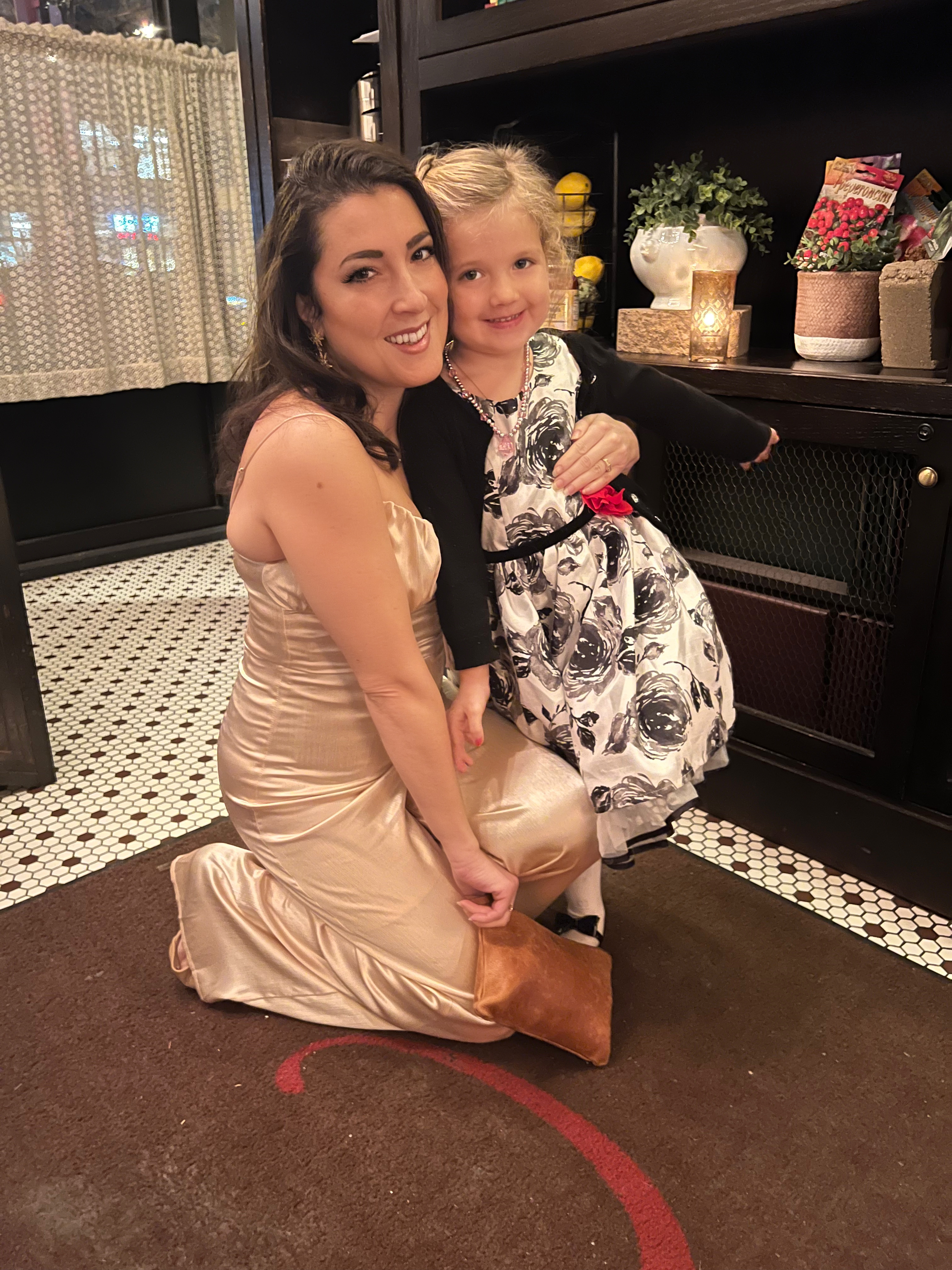
And maybe it’s that. Maybe it’s that my own body is changing and I’m moving through perimenopause and learning, once again, how wildly a body you know so well can suddenly feel unfamiliar. My daughter is entering yet another phase of childhood, and somehow that makes me feel both incredibly proud and a little heartsick at the same time. I can feel one version of motherhood ending while another one begins.
Or maybe I’m just at an age where I’m starting to notice the gradual turn.
The way the seasons of a woman’s life don’t really announce themselves. There isn’t a day when you wake up and think, Well, that version of me is over. Here comes the next one. They overlap. They creep in. Your body changes a little. Your child needs you differently. Your work matters differently. Your relationships shift. Something that once felt incredibly important suddenly doesn’t, while something you never thought much about takes up an enormous amount of space.
And because I spend so much of my life surrounded by women—and men, in their own way—moving through these enormous transitions, I get to watch that gradual turn happen over and over again.
Which has made me realize how often we misunderstand it.
We Like a Timeline
We like beginnings and endings. We like milestones and timelines. We like being able to say this is the part where this happens and then move neatly onto whatever comes next.
But bodies and families are rarely that cooperative.
And nowhere have I seen that more clearly than in postpartum.
For a long time, I thought I understood postpartum. I thought it was mostly those first few weeks after a baby was born. Maybe the first three months. The newborn fog. The hormone crash. The sleeplessness. I thought if postpartum depression or anxiety was going to hit, it would happen early—and if you made it through that initial window relatively okay, you were probably in the clear.
Then I spent years watching women move through postpartum inside Le Village. And what I started to understand was how incomplete that picture was.
Postpartum is not just the immediate recovery period after birth. It is a much longer reorganization of a woman’s body, identity, relationships, work, hormones, routines, and sense of self. And the effects of that reorganization do not show up in the same way—or at the same time—for everyone.
I’ve watched women struggle almost immediately. I’ve also watched women move through those early months seemingly fine and then get completely knocked sideways later. Sometimes it coincides with returning to work. Sometimes with weaning. Sometimes with sleep deprivation finally catching up. Sometimes with another hormonal shift.
Sometimes with a baby becoming a toddler and suddenly needing their mother in a completely different way.
And sometimes there isn’t a clean explanation at all.
That was probably my biggest learning curve: realizing that postpartum doesn’t always arrive the way we expect it to, and it certainly doesn’t operate on a neat three-month timeline.
As Different as Our Children
If there is one thing you learn quickly when you put a bunch of parents in the same room, it’s that we are all doing this very differently.
Our children are different. Our bodies are different. Our relationships are different. Our careers are different. Our thresholds are different. And, Lord knows, our parenting choices are different.
One woman is desperate to return to work because work is the place where she feels most like herself. Another gets there and realizes she isn’t ready. One mother breastfeeds for two years. Another formula feeds from day one. One family sleep trains. Another would rather walk across hot coals. Someone is thriving professionally while quietly struggling at home. Someone else feels more fulfilled by motherhood than she ever expected and is wrestling with what that means for the ambitions she had before.
And the partners are changing too. Not physically or hormonally in the same way, obviously, but emotionally, relationally, practically. They’re learning who they are inside a family that did not exist before.
There is no universal experience of becoming a parent.
So why do we keep expecting people to move through it on a universal timeline?
Maybe "Back" is the Wrong Direction
The more I’ve watched these families, the more I’ve started to think that we misunderstand the entire premise.
Having a child is not an interruption from which you recover. It is a massive reorganization of your life.
Your body changes. Your relationship changes. Your friendships change. Your career changes. Your finances change. Your relationship with time changes. Your priorities change. Sometimes your ambition changes. Sometimes it absolutely does not, but suddenly figuring out how to hold onto it becomes infinitely more complicated.
And yet so much of the language we use is about getting back.
Get your body back. Get back to work. Get the baby sleeping so you can get back to normal. Get your social life back. Get your relationship back. Feel like yourself again.
I understand the impulse. There are pieces of ourselves we desperately miss during periods of enormous change.
But I’m increasingly convinced that back might be the wrong direction. Because you are not the same person. How could you be?
That doesn’t mean you’ve lost yourself. It means your life has expanded and rearranged itself, and you are trying to figure out where all the pieces belong now. That takes time. And, more importantly, it takes different amounts of time for different people.
Being Known Well Enough to Be Noticed

This is where I think community matters more than we sometimes realize.
One of the most beautiful things about Le Village is that we don’t just meet families once. We live alongside them for a while. We know the mom who normally works at the big table and talks to everyone. We know the dad who always has a joke at drop-off. We know who has been up all night, who is weaning, who just went back to work, who is starting a company, who is questioning a career, whose toddler has suddenly stopped sleeping, whose baby finally started sleeping, whose whole household seems to be held together by coffee and sheer force of will.
We know each other in the ordinary. And when you know people in the ordinary, you sometimes notice when something changes.
Not because we’re diagnosing anyone. Not because the person sitting next to you in coworking is suddenly responsible for your mental health. But because human beings are remarkably good at noticing the people they actually know.
Sometimes support begins with something as simple as, Hey, you don’t seem like yourself lately. How are you actually doing?
And then—and this might be the most important part—being willing to hear the answer without judgment.
You Don’t Have to Do It My Way for Me to Show Up for You
Parenting has become an incredibly easy place to judge one another. There are a thousand decisions to make and approximately a million people willing to tell you which one is correct.
But you don’t have to make the same choices as another parent to care about them.
You don’t have to breastfeed to support the woman struggling with weaning. You don’t have to make the same career choices to understand why returning to work feels complicated. You don’t have to parent the same way or structure your family the same way to recognize when another human being needs someone beside them.
You don’t even have to understand exactly what they’re feeling. You just have to believe them when they tell you.
And I have watched our members do this for one another over and over again.
Someone holds someone else’s baby. Someone brings coffee. Someone admits, That happened to me too. Someone recommends a therapist. Someone checks in the next morning. Someone says the thing they were terrified to admit out loud and discovers that the woman sitting three chairs away went through something remarkably similar six months earlier.
Our communities wrap their arms around people. Not perfectly. Not clinically. Not because everyone always has the right words.
Just because they’re there.
Community Can Be a Bridge
That idea has become even more important to me as I’ve learned more about maternal mental health and how differently its challenges can show up. It’s also part of why I’m so excited about our partnership with Meridian Psychiatric Partners at Le Village Irving Park, and why I hope it’s something we’re able to bring more broadly across our communities.
Community is not treatment. Friendship is not treatment. A coworker noticing that you seem different is not treatment.
But those things can be a bridge to it.
We talk a lot about making mental health care accessible, and usually we mean financially or geographically. Those things matter enormously. But I think there is another kind of accessibility we don’t talk about enough: making support feel like a normal part of the places where people are already living their lives.
Not something you have to seek out only after everything has fallen apart. Not something whispered about after someone reaches a breaking point. Just another part of taking care of people.
And perhaps the first step toward getting someone professional support is simply having a community close enough to recognize that they might need more than the community itself can give.
Somewhere to Land
The longer I do this work, the more I think about what we are actually building.
Yes, Le Village started because parents needed somewhere they could work while staying close to their children. That problem is still very real. But somewhere along the way, I realized the physical space was only part of it.
What people needed was proximity.
They needed other adults. Other parents. Professional identity. Friendship. Someone to laugh with after a horrific night of sleep. Someone who understood why leaving your baby for the first time could feel unbearable and someone else who understood why going back to work could feel like finally taking a full breath.
They needed a place where becoming a mother didn’t require disappearing from every other part of themselves.
And maybe that’s what I’ve been meditating on this August. We spend so much of our lives trying to get back—to our routines, our bodies, our work, our old selves. But life seems to have very little interest in taking us backward. Our children grow. Our bodies change. Our relationships evolve. We move into new seasons sometimes before we’ve even realized the last one has ended.
Maybe the work isn’t figuring out how to get back. Maybe it’s learning to recognize the gradual turn while we’re inside of it—to notice it in ourselves and in the people we love, to give each other a little more grace when the transition doesn’t happen on schedule, and to remember that needing support in the middle of becoming someone new is not unusual.
Maybe we don’t need to rush one another through these seasons at all.
-❤️ DBC
If you're looking for a preschool program, flexible childcare, or a supportive community for your family this fall, we'd love to meet you. Schedule a tour at one of our locations, explore our programs, or learn more about how Le Village helps children transition confidently into a new school year.
What makes Le Village different?
Le Village Cowork supports modern families with flexible coworking and childcare designed for infants through preschool-aged children. Whether you need a few productive hours, a consistent weekly rhythm, or a supportive community, our memberships are built to fit the realities of modern parenting.
For families looking for a more traditional preschool experience, Le Village Learners offers a play-based preschool program focused on curiosity, creativity, social-emotional development, and kindergarten readiness. Our classrooms encourage children to explore, ask questions, build relationships, and develop the confidence they'll carry into elementary school and beyond.


Comments